

Air Duct Mold Removal in Manchester, NH
Manchester's older housing stock, particularly in neighborhoods like the West Side and North End, often contends with moisture accumulation driven by New England's humid spring and summer seasons—conditions that readily promote mold growth inside ductwork and HVAC systems. Air duct mold removal addresses this problem directly, improving indoor air quality by removing contamination from the systems that circulate air throughout your home. Trudy Mold Remediation connects Manchester property owners with local providers who can inspect and remediate duct mold, helping protect your family's health and your home's air quality.
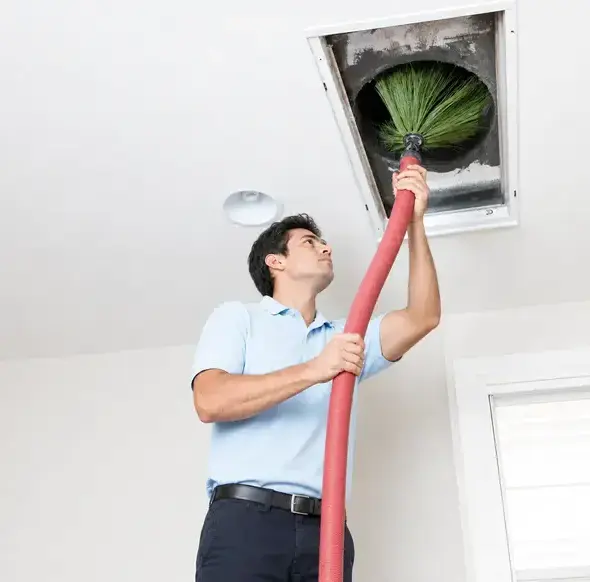
What gets cleaned in a duct system, and what comes out
Whether a material is cleaned in place or removed is not decided by how bad the mold looks. It is decided by what the material is made of and how large the affected area is. Below is the EPA’s published guidance on both counts, for a duct system.
| Material | Under 10 sq ftabout a cabinet door, or one ceiling tile | 10 to 100 sq ftroughly one wall, or a small bathroom | Over 100 sq ftmore than one room's worth of surface |
|---|---|---|---|
| Non-porous, hard surfacesregisters, grilles and the air handler cabinetEPA, Table 2 | Wet vacuumDamp wipeHEPA vacuum | Wet vacuumDamp wipeHEPA vacuum | Wet vacuumDamp wipeHEPA vacuum |
What those methods mean, in EPA's words
- Wet vacuum
Wet vacuums are vacuum cleaners designed to collect water. They can be used to remove water from floors, carpets and hard surfaces where water has accumulated.
EPA, cleanup methods- Damp wipe
Mold can generally be removed from nonporous (hard) surfaces by wiping or scrubbing with water, or water and detergent.
EPA, cleanup methods- HEPA vacuum
HEPA (High-Efficiency Particulate Air) vacuums are recommended for final cleanup of remediation areas after materials have been thoroughly dried and contaminated materials removed.
EPA, cleanup methods
Cleaned in place, not replaced
- Hard-surface (sheet metal) ducts — sheet-metal trunks, branches and boots.
There is substantial visible mold growth inside hard surface (e.g., sheet metal) ducts or on other components of your heating and cooling system.
EPA, air duct cleaningEPA lists this as a condition under which duct CLEANING is recommended — not as a reason to replace the ducts. It says treating mold on bare sheet metal is much easier, and that cleaning and treatment with an EPA-registered biocide are possible.
Removed and replaced, whatever the area
- Insulated air ducts — flexible or internally lined insulated ducts.
If you have insulated air ducts and the insulation gets wet or moldy it cannot be effectively cleaned and should be removed and replaced.
EPA, air duct cleaningThe affected runs are what get replaced — not necessarily the whole system.
These guidelines are for damage caused by clean water. If you know or suspect that the water source is contaminated with sewage, or chemical or biological pollutants, then Personal Protective Equipment and containment are required by OSHA.
EPA, Table 1Porous materials that are wet and have mold growing on them may have to be discarded.
EPA, cleanup methodsMold can grow on wood, drywall, carpet and furniture if they remain wet for more than 24 hours.
EPA, flood cleanup
EPA draws a hard line here, and it is the thing worth knowing before you accept a quote: hard sheet-metal ducts can be cleaned, but insulated ducts whose insulation is wet or moldy cannot. EPA also treats duct cleaning as warranted when there is substantial visible growth inside hard-surface ducts — not as routine maintenance. If the affected runs are flexible insulated duct, the honest answer is replacing those runs.
Manchester averages about 10.1 days a year at or above 90 °F, 3.9 of them in July.Source: NOAA 1991-2020 Climate Normals, MASSABESIC LAKE, NH US station (3.1 mi from Manchester)
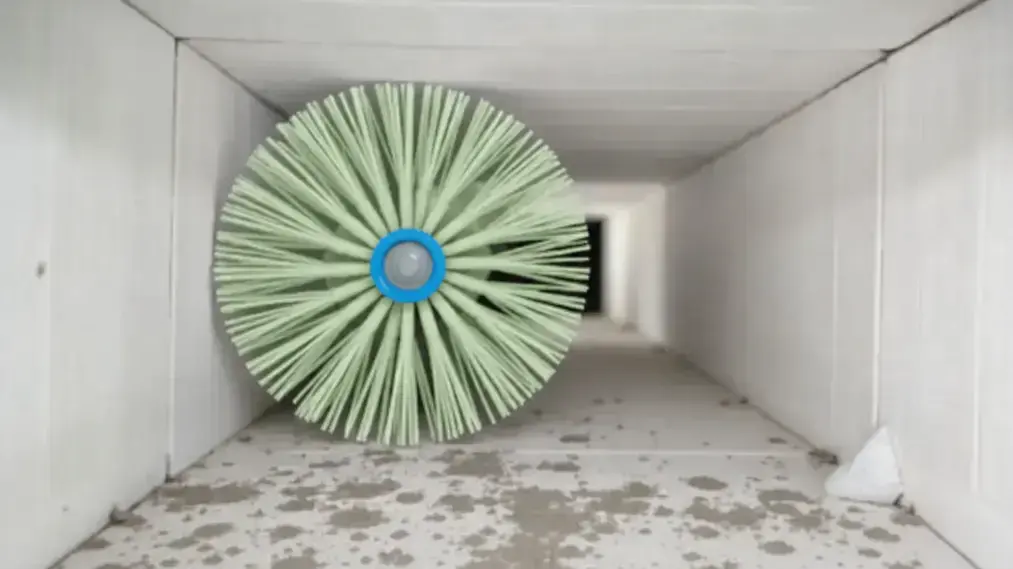
Air Duct Mold Removal for Manchester Homes
Manchester's year-round humidity and moisture-rich spring and summer conditions create an environment where mold can take hold in unexpected places—including the air ducts that circulate air throughout your home. Older homes, particularly those in historic neighborhoods like the West Side and North End, are especially vulnerable to moisture accumulation in ductwork and HVAC systems. When mold colonizes your air ducts, it circulates spores and odors with every cycle of your heating and cooling system, potentially affecting indoor air quality throughout your property. Addressing air duct mold promptly is essential to restore clean, healthy air flow and prevent the problem from spreading to other areas of your home.
Trudy Mold Remediation connects Manchester property owners with local independent providers who specialize in air duct mold removal and understand the thorough inspection and containment measures this work requires. These providers assess the full extent of mold in your ductwork, plan safe removal that prevents spore dispersal into living spaces, and complete the work with follow-up verification to help ensure the system operates cleanly. By connecting you with responsive local professionals, Trudy Mold Remediation helps you take control of your indoor air quality and move forward with confidence.
Why Manchester Property Owners Choose Trudy for Air Duct Mold Removal
Experienced Air Duct Mold Specialists
Trudy connects you with local providers who understand air duct mold removal thoroughly. They know how to safely access ductwork, identify contamination, and remove mold without releasing spores into your home.
Fast Response to Air Duct Concerns
When mold affects your ducts, air quality declines quickly. Trudy's local provider network responds promptly to inspection requests and removal jobs, getting your indoor air addressed without unnecessary delay.
Clear Communication Throughout Removal
You'll receive straightforward explanations of what's found in your ductwork and how removal will proceed. Trudy's providers keep you informed every step so you understand the work and feel confident in the outcome.
Year-Round Moisture Solutions for Manchester Homes
New England's persistent humidity—especially during spring and summer—creates conditions where mold thrives in air ducts and ductwork of older homes throughout Manchester. Thorough air duct mold removal is essential to protect indoor air quality in these environments.
How Our Air Duct Mold Removal Process Works
Schedule Your Air Duct Mold Removal Inspection
Contact Trudy Mold Remediation to arrange an air duct assessment with a local Manchester provider. A specialist will inspect your ductwork, identify mold growth, and determine the scope of air duct mold removal needed for your home.
Professional Air Duct Mold Diagnosis
The provider conducts a detailed evaluation of your air ducts to pinpoint mold colonies, assess moisture sources, and plan safe air duct mold removal. Damp conditions common in Manchester homes can accelerate mold development inside ductwork, affecting indoor air quality throughout your property.
Complete Air Duct Mold Removal and Clearance
The independent local provider removes mold from your ducts using containment and remediation techniques, then clears debris and restores airflow. Follow-up verification ensures your air duct mold removal is complete and your HVAC system operates safely.
Dealing with Air Duct Mold Removal in Manchester? Get fast, professional help.
Call Now — (603) 207-4474Air Duct Mold Removal Across Manchester
Manchester's older residential neighborhoods face persistent moisture challenges that extend deep into HVAC systems. Year-round humidity typical of inland New England creates ongoing conditions where moisture accumulates in ductwork, particularly during the damp spring and summer months when indoor air quality concerns peak. Homes throughout areas like the West Side and North End—many dating to the mill-era—carry this moisture burden through aging construction and established basements and crawl spaces that feed damp air into central heating and cooling systems. When that air circulates through ducts, mold can colonize insulation, duct interiors, and dampers, spreading spores throughout the home with every cycle.
Air duct mold removal in Manchester requires attention to these building-wide moisture patterns. Local providers connected through Trudy Mold Remediation understand how humidity pathways from foundation-level moisture travel upward into ductwork, and they address both the removal itself and the conditions that allowed growth to establish. Thorough inspection and containment during removal protect indoor air quality while the work proceeds, and identifying moisture sources helps prevent recurrence in systems that pull air from moisture-prone spaces below grade.
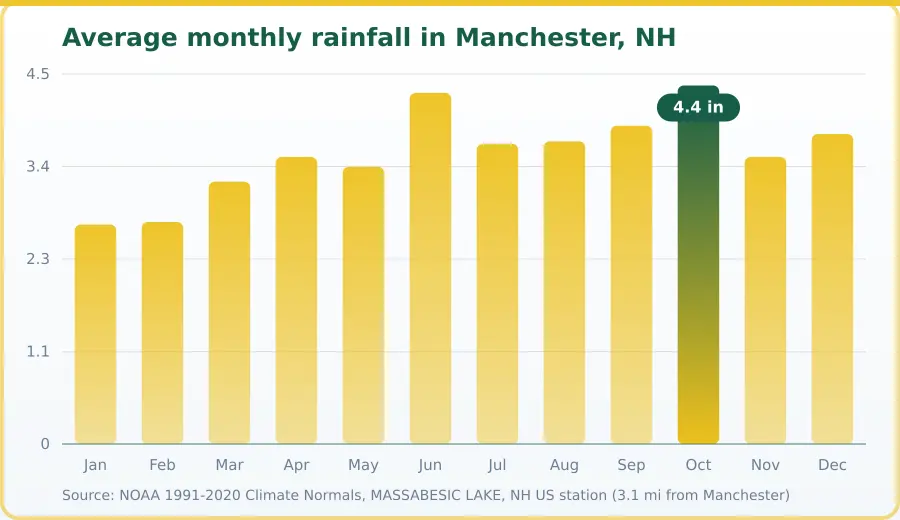
| Period | Monthly rainfall (in) |
|---|---|
| Jan | 2.7 |
| Feb | 2.7 |
| Mar | 3.2 |
| Apr | 3.5 |
| May | 3.4 |
| Jun | 4.3 |
| Jul | 3.7 |
| Aug | 3.7 |
| Sep | 3.9 |
| Oct | 4.4 |
| Nov | 3.5 |
| Dec | 3.8 |
Source: NOAA 1991-2020 Climate Normals, MASSABESIC LAKE, NH US station (3.1 mi from Manchester). Retrieved October 5, 2026.
Seasonal Air Duct Mold in Manchester, NH
Spring: Moisture Awakening
Spring thaw and increased indoor humidity create ideal conditions for air duct mold to flourish in Manchester homes. Condensation forms inside ductwork as warm, moist air meets cooler surfaces. Trudy Mold Remediation connects property owners with local providers who inspect and remove mold from air ducts before it spreads throughout your HVAC system.
Summer: Active Growth Season
High summer humidity, combined with damp conditions common in older Manchester homes and their basements and crawl spaces, accelerates mold colonization in air ducts. Running air conditioning can trap moisture inside ductwork. Trudy Mold Remediation helps you find local providers who perform thorough air duct mold removal and identify moisture sources feeding growth.
Fall: Transition and Reactivation
Cooling nights and heating season startup create temperature swings that encourage condensation in air ducts. Mold growth may have lingered unseen all summer. Trudy Mold Remediation connects you with local air duct mold removal specialists who can assess and remediate ducts before your heating system circulates spores throughout your home.
Winter: Contained Growth
Cold, dry outdoor air contrasts sharply with heated indoor environments, intensifying condensation in ductwork and creating pockets where air duct mold thrives. Winter heating cycles can worsen circulation of mold spores indoors. Trudy Mold Remediation links property owners to local providers offering air duct mold removal and remediation during the heating season.
Air Duct Mold Removal FAQs — Manchester, NH
Air duct mold removal involves inspecting your HVAC system for mold growth, then carefully removing contaminated sections of ductwork or cleaning accessible ducts with specialized equipment. The process includes containment to prevent spores from spreading through your home, removal or treatment of affected material, and restoration of airflow. A local provider will assess your specific system and recommend the appropriate approach for your property.
Trudy Mold Remediation connects you with independent local providers in Manchester who can typically schedule inspections and consultations quickly. Response times vary by provider availability, but because they operate locally, many can assess your air duct situation and discuss next steps within days rather than weeks. Contact a provider directly through our service to discuss your timeline needs.
Air duct mold removal pricing depends on the extent of mold contamination, the size and configuration of your ductwork, whether ducts need replacement or cleaning, and accessibility within your home. Older Manchester properties may have more complex layouts affecting labor time. Each independent provider offers their own pricing based on your specific situation, which they'll detail after a full inspection.
Before air duct mold removal, clear the areas around your furnace, air handlers, and accessible ductwork so technicians have safe access. Close interior doors to contain the work area if recommended by your provider. Arrange for household members and pets to avoid work zones during the service. Your provider will give you detailed preparation instructions specific to your home's layout and the scope of removal needed.
After air duct mold removal, monitor your home's humidity levels and ensure your HVAC system drains properly. Use exhaust fans in bathrooms and kitchens, fix any water leaks promptly, and keep your furnace filter clean and changed regularly. Good airflow and low indoor moisture reduce conditions that allow mold to regrow in ductwork over time.
Manchester's inland New England climate brings persistent moisture, especially during spring and summer, which can encourage mold growth inside ductwork where air doesn't flow as freely. When mold develops in ducts, it spreads spores throughout your home every time your heating or cooling runs. Timely removal keeps your indoor air cleaner and your HVAC system functioning properly during the wettest months when humidity is highest.
Related Services
Homeowner Safety Toolkit
Verify Your Manchester, NH Mold Remediation Company
Before you hire anyone, use these independent national resources to confirm credentials, standards, and track record.
IICRC
Publishes the S520 standard for professional mold remediation. Confirm a company's technicians hold real, current IICRC certification before you hire them.
Verify CertificationCDC
Covers the health effects of mold exposure and safe cleanup practices, separate from the remediation work itself — useful if anyone in the home has respiratory symptoms.
Mold Health GuideBBB
Look up any mold remediation company's complaint history, customer reviews, and accreditation status — a free, independent check before you hire.
Check StandingDealing with Air Duct Mold Removal in Manchester, NH? Call (603) 207-4474 for 24/7 help.
Call Now — (603) 207-4474Areas We Serve in Manchester, New Hampshire
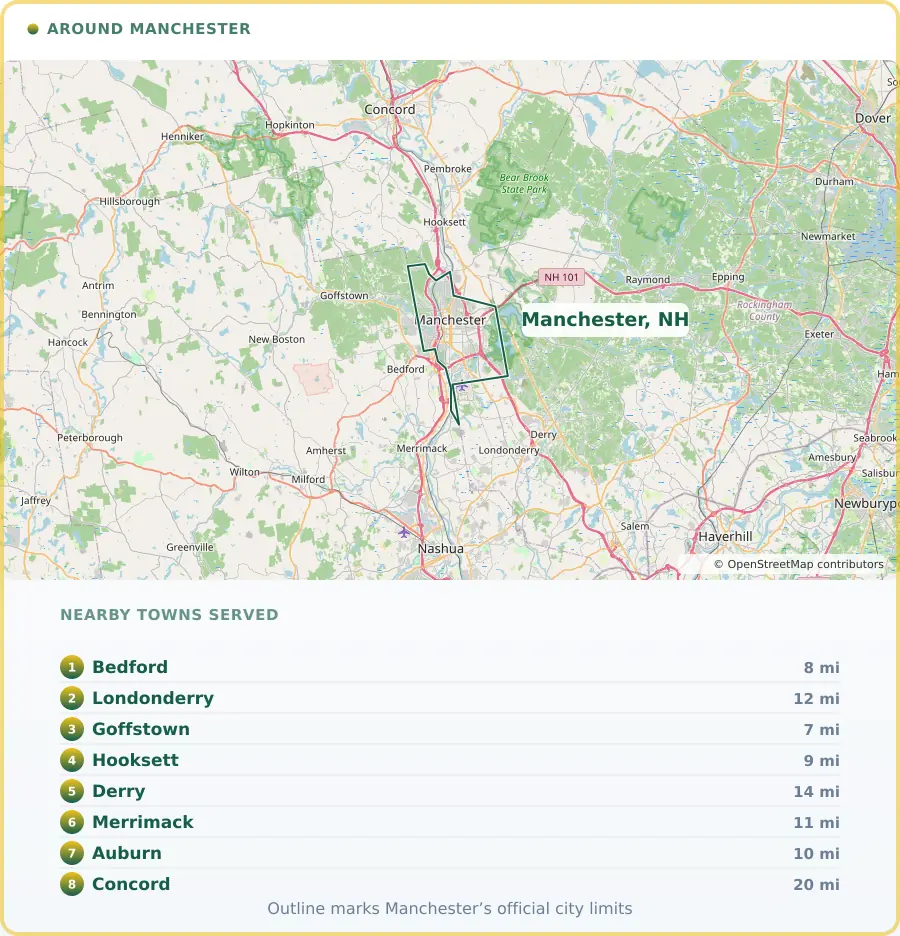
Based in Manchester, NH, with 8 nearby communities inside the service area — near enough to reach quickly, not just listed on a map.
Manchester, NH Information
Manchester is New Hampshire's largest city, a Merrimack River hub where brick mill buildings from its textile-making days now share skylines with modern offices. As the state's economic anchor, it blends healthcare, education, and advanced manufacturing: Elliot Health System and Catholic Medical Center care for the region, Southern New Hampshire University draws students citywide, and BAE Systems and DEKA Research keep engineering and defense work humming alongside finance and retail employers like Fidelity Investments and Citizens Bank.
With roughly 115,000 residents, Manchester still feels like a collection of neighborhoods rather than one sprawling city, from the historic Amoskeag riverside to the tight-knit streets of the West Side. It's a place built on reinvention, where old industry and new ideas keep finding room to coexist.

Photo: Billy Hathorn, CC BY-SA 3.0