

Mold Inspection in Manchester, NH
Manchester's older residential stock, particularly in neighborhoods like the West Side and North End, often contains basements and crawl spaces where year-round moisture and damp seasonal conditions create an environment where mold can take hold. A mold inspection identifies active growth, moisture sources, and affected materials before they spread further or compromise indoor air quality. Trudy Mold Remediation connects you with local inspection providers who assess the full scope of the problem and recommend the remediation steps your property needs.

What does a mold inspection look for in Manchester, NH?
The useful question is not whether to test but what a test can settle. EPA is specific about both halves of that, and this is its published position.
Surface sampling may be useful to determine if an area has been adequately cleaned or remediated.EPA
Sampling for mold should be conducted by professionals who have specific experience in designing mold sampling protocols, sampling methods and interpreting results.EPA
So sampling earns its place at the two ends of a job — confirming what is there when it is hidden, and confirming it has gone once the work is done. EPA is equally clear that it is not always needed: in most cases, if visible mold growth is present, sampling is unnecessary, and there is no federal number a result can be measured against.
In most cases, if visible mold growth is present, sampling is unnecessary.EPA
Standards or Threshold Limit Values (TLVs) for airborne concentrations of mold, or mold spores, have not been set.EPA
There is a reason to look harder here than the visible surface: Hillsborough County has recorded flood events in 20 separate years, most recently in 2025. Water that arrived years ago leaves growth behind whether or not anyone found it at the time.Source: NOAA Storm Events Database, Hillsborough County (1996-2026; Flood, Flash Flood and Coastal Flood events)

Professional Mold Inspection Services in Manchester, NH
Manchester's older residential neighborhoods contend with persistent indoor moisture challenges driven by the region's year-round humidity and damp spring and summer conditions typical of inland New England. Many homes throughout Manchester, particularly those built during the city's historic mill era, feature basements and crawl spaces where moisture accumulates easily and creates environments where mold can take hold. Property owners who notice discoloration on walls or ceilings, detect musty odors, or experience unexplained respiratory concerns should treat mold inspection as a priority—not only for structural integrity but for the health and air quality of their households.
Trudy Mold Remediation connects Manchester property owners with local independent providers who conduct thorough mold inspections, identifying moisture sources, visible growth, and areas of concern that a casual walk-through might miss. These professionals use systematic inspection methods to document findings and discuss what they discover, then work through remediation steps tailored to your specific situation. Whether you're addressing an active moisture problem or preparing for a home transaction, a professional mold inspection gives you clarity and a clear path forward.
Why Manchester Property Owners Choose Trudy Mold Inspection
Fast Local Mold Inspection
Trudy connects you with independent inspectors near Manchester who respond quickly to moisture concerns. Same-week appointments mean faster detection and peace of mind about indoor air quality.
Thorough Mold Inspection Process
Inspectors assess visible growth, hidden moisture sources, and air quality through systematic evaluation. Detailed reports guide safe remediation decisions without guesswork or incomplete findings.
Clear Communication During Inspection
Independent providers explain findings in plain language, answering questions about extent and next steps. No jargon—just straightforward guidance on what mold means for your home and family.
Inspection Built for Manchester's Moisture
Older Manchester homes with basements and crawl spaces face persistent dampness year-round, especially during spring and summer. Thorough mold inspection catches early growth in these moisture-prone spaces before it spreads.
How Our Mold Inspection Process Works
Request a Mold Inspection
Contact Trudy Mold Remediation to schedule a mold inspection in Manchester, NH. We connect you with a local independent provider who will assess your property for mold growth, moisture sources, and indoor air quality concerns.
Receive Your Mold Inspection Report
The inspector examines areas prone to moisture accumulation—including basements and crawl spaces common in Manchester's older residential stock—and documents findings with detailed recommendations for safe removal and moisture control.
Move Forward With Remediation
Based on the mold inspection results, the local provider outlines next steps for containment and removal. You'll have clear guidance on addressing moisture sources to help prevent future mold growth and protect your home's indoor environment.
Dealing with Mold Inspection in Manchester? Get fast, professional help.
Call Now — (603) 207-4474Mold Inspection Across Manchester's Neighborhoods
Manchester's residential landscape spans both historic mill-era homes and more modern neighborhoods, each presenting distinct moisture challenges that affect mold inspection priorities. Older housing stock throughout the city—particularly in areas like the West Side and North End—features basements and crawl spaces that are especially vulnerable to moisture accumulation. These foundation spaces require thorough inspection because they're prone to water seepage and condensation, creating environments where mold can develop and spread into living areas above.
Year-round humidity and damp conditions during spring and summer months intensify moisture problems in Manchester homes, making regular mold inspection a practical step for protecting indoor air quality. A professional mold inspection identifies moisture sources, visible growth, and at-risk areas before minor dampness becomes a larger issue. Whether a property is newly occupied or has been in a family for decades, understanding how local moisture patterns affect your specific home helps property owners make informed decisions about inspection timing and prevention measures.
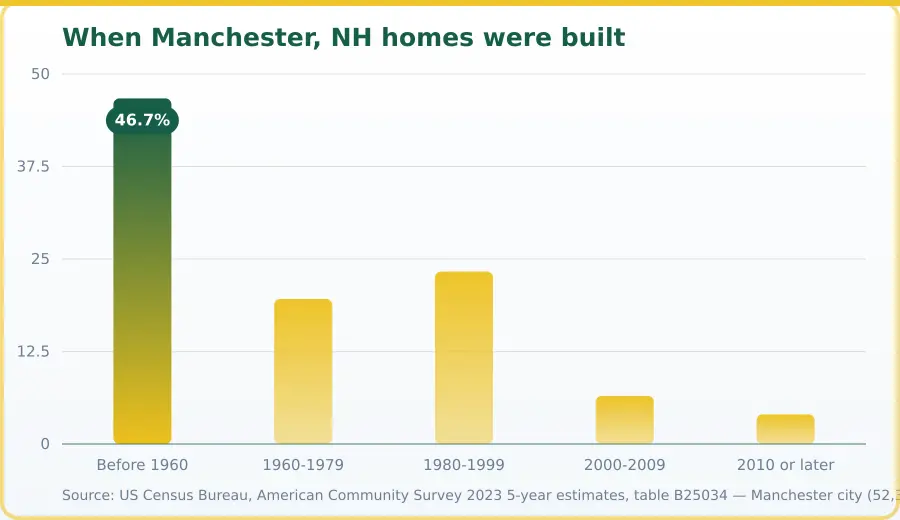
| Period | When homes were built (%) |
|---|---|
| Before 1960 | 46.7 |
| 1960-1979 | 19.6 |
| 1980-1999 | 23.3 |
| 2000-2009 | 6.5 |
| 2010 or later | 4 |
Source: US Census Bureau, American Community Survey 2023 5-year estimates, table B25034 — Manchester city (52,391 housing units). Retrieved October 5, 2026.
Seasonal Mold Inspection Needs in Manchester, NH
Spring: Thaw and Moisture Surge
As snowmelt and spring rains saturate foundations and crawl spaces throughout Manchester's older residential stock, mold inspection becomes critical for detecting growth that thrived undetected during winter. Trudy Mold Remediation connects property owners with local inspectors who identify moisture entry points and active mold before it spreads.
Summer: Peak Growth Season
Summer humidity and damp conditions across inland New England create ideal mold proliferation in basements and crawl spaces common to Manchester's historic mill-era homes. Professional mold inspection during these months reveals colonies at their most visible and establishes remediation priorities before fall and winter demand increases.
Fall: Hidden Colonies and Preparation
As temperatures drop and homes are sealed tighter, mold inspection reveals moisture pockets and dormant growth that may worsen once heating systems activate and indoor humidity fluctuates. Trudy Mold Remediation helps property owners schedule inspections before winter, when remediation crews face scheduling delays and moisture problems intensify indoors.
Winter: Cold-Weather Condensation Risk
Winter's temperature swings create condensation on cold surfaces and in poorly ventilated spaces, while heating systems can trap moisture indoors—conditions that accelerate mold development. Mold inspection during winter months identifies these hidden problem areas so remediation can begin before spring moisture returns.
Mold Inspection FAQs — Manchester, NH
A mold inspection includes a visual assessment of your home's interior and, typically, areas prone to moisture like basements and crawl spaces. The inspector documents visible mold, checks humidity levels, identifies water damage or leaks, and may collect air or surface samples for lab analysis. You'll receive findings and recommendations on whether remediation is needed.
Trudy Mold Remediation connects you with independent local providers in Manchester who typically respond to inspection requests within one to two business days. Actual scheduling depends on provider availability and your urgency. Contact us with your preferred timeframe, and we'll match you with a provider ready to help.
Inspection pricing depends on your home's size, the number of areas to be assessed, whether sampling is included, and if the inspector needs to access difficult-to-reach spaces like crawl spaces. Travel distance within Manchester may also factor in. The independent provider you're connected with will discuss pricing during your initial contact.
Ensure the inspector has safe access to all areas, especially basements and crawl spaces where mold commonly develops. Clear clutter if possible, and note any spots where you've noticed moisture, odors, or visible discoloration. Make a list of water damage history or plumbing issues. The inspector will guide you on any other preparation needed when they arrive.
Manage indoor moisture by improving ventilation, fixing leaks promptly, and keeping humidity levels moderate. In basements and crawl spaces, ensure proper drainage and consider a dehumidifier during damp seasons. Regular inspection of vulnerable areas helps catch early signs of moisture before mold takes hold again.
Manchester's spring and summer bring elevated moisture that can accelerate mold growth, making these seasons ideal for inspections—especially if you've noticed dampness or odors. However, mold can develop year-round indoors due to consistent humidity typical of inland New England, so scheduling an inspection whenever you suspect moisture problems is wise rather than waiting for a particular season.
Related Services
Homeowner Safety Toolkit
Verify Your Manchester, NH Mold Remediation Company
Before you hire anyone, use these independent national resources to confirm credentials, standards, and track record.
IICRC
Publishes the S520 standard for professional mold remediation. Confirm a company's technicians hold real, current IICRC certification before you hire them.
Verify CertificationCDC
Covers the health effects of mold exposure and safe cleanup practices, separate from the remediation work itself — useful if anyone in the home has respiratory symptoms.
Mold Health GuideBBB
Look up any mold remediation company's complaint history, customer reviews, and accreditation status — a free, independent check before you hire.
Check StandingDealing with Mold Inspection in Manchester, NH? Call (603) 207-4474 for 24/7 help.
Call Now — (603) 207-4474Areas We Serve in Manchester, New Hampshire
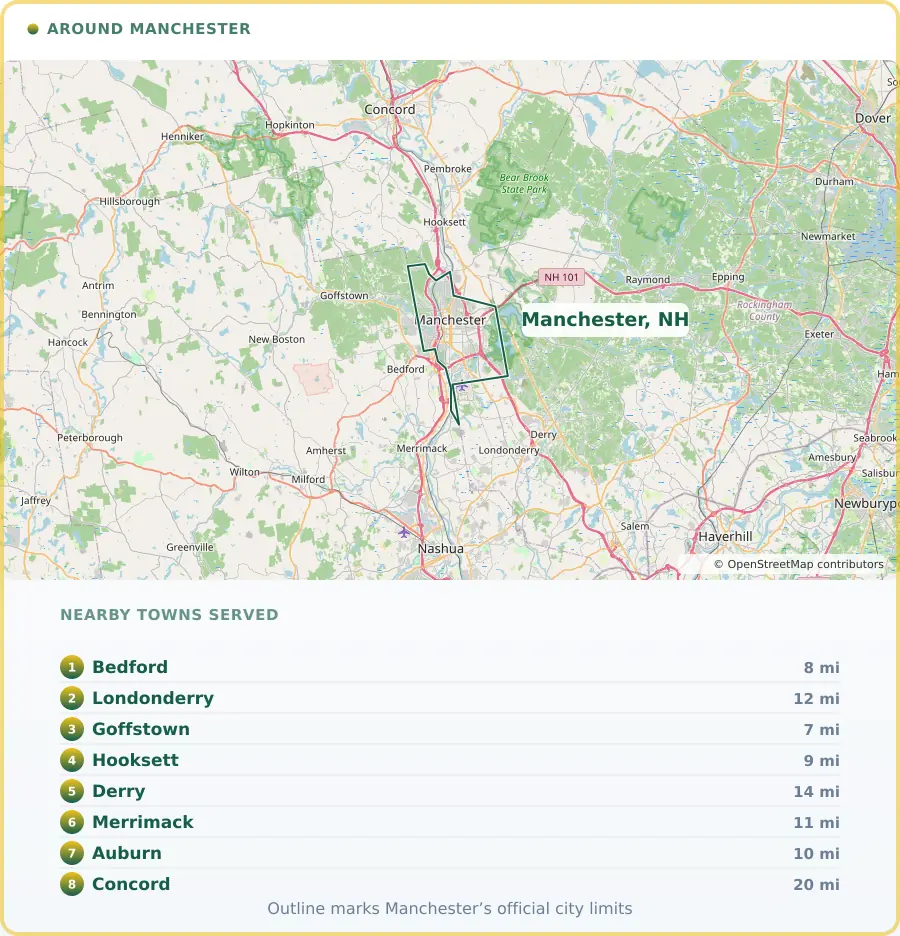
Based in Manchester, NH, with 8 nearby communities inside the service area — near enough to reach quickly, not just listed on a map.
Manchester, NH Information
Manchester is New Hampshire's largest city, a Merrimack River hub where brick mill buildings from its textile-making days now share skylines with modern offices. As the state's economic anchor, it blends healthcare, education, and advanced manufacturing: Elliot Health System and Catholic Medical Center care for the region, Southern New Hampshire University draws students citywide, and BAE Systems and DEKA Research keep engineering and defense work humming alongside finance and retail employers like Fidelity Investments and Citizens Bank.
With roughly 115,000 residents, Manchester still feels like a collection of neighborhoods rather than one sprawling city, from the historic Amoskeag riverside to the tight-knit streets of the West Side. It's a place built on reinvention, where old industry and new ideas keep finding room to coexist.

Photo: Billy Hathorn, CC BY-SA 3.0