

Ceiling Mold Removal in Manchester, NH
Manchester's older housing stock, particularly in areas like Amoskeag and the West Side, often contends with year-round moisture from the region's inland New England humidity and spring dampness, conditions that create the settling grounds for mold growth on ceilings and upper structures. Ceiling mold removal requires prompt attention to prevent it from spreading deeper into framing and insulation while protecting indoor air quality. Trudy Mold Remediation connects you with independent local providers who can assess the extent of ceiling mold and carry out safe, thorough removal tailored to your home.
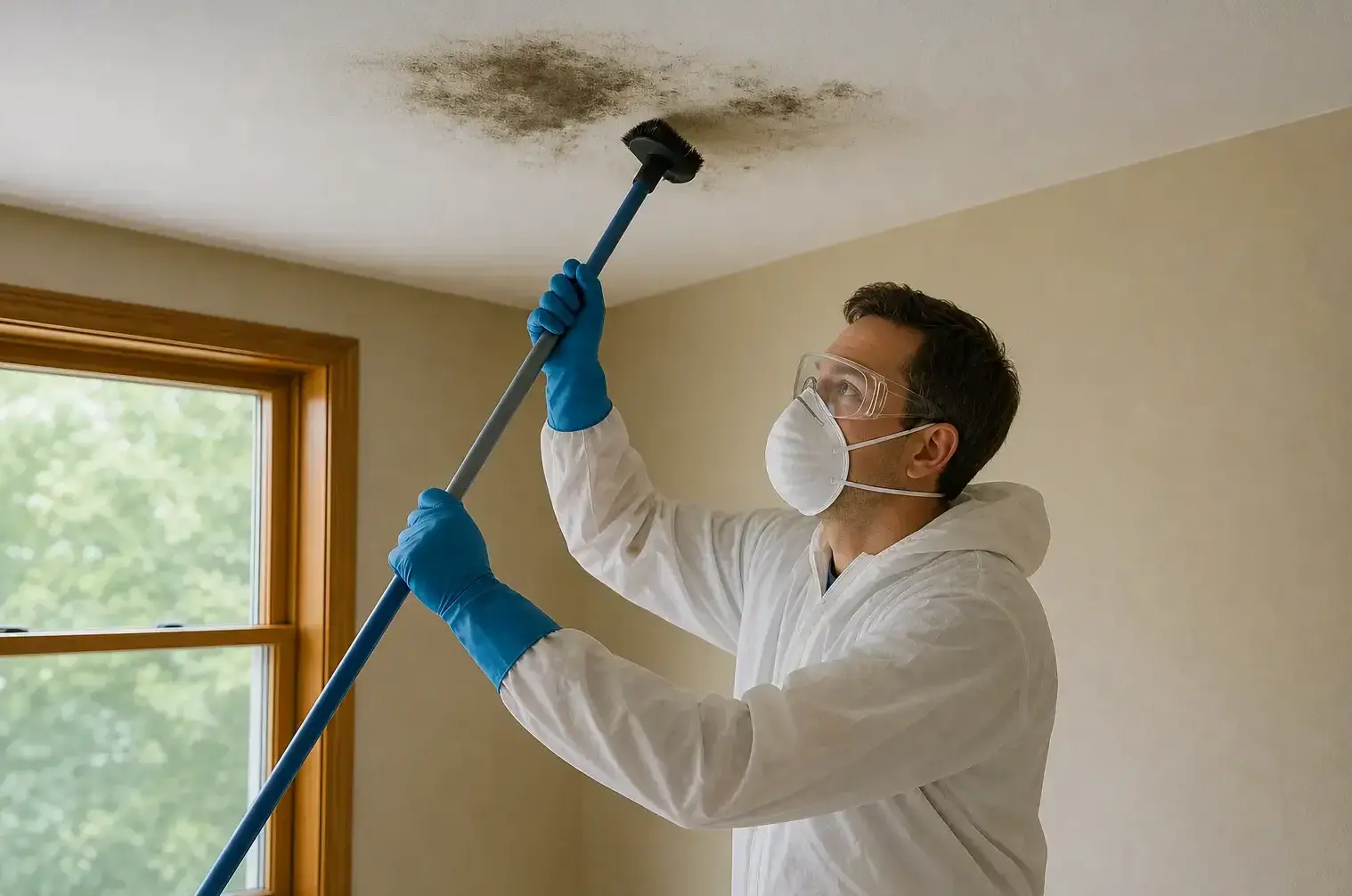
What gets cleaned on a ceiling, and what comes out
Whether a material is cleaned in place or removed is not decided by how bad the mold looks. It is decided by what the material is made of and how large the affected area is. Below is the EPA’s published guidance on both counts, for a ceiling.
| Material | Under 10 sq ftabout a cabinet door, or one ceiling tile | 10 to 100 sq ftroughly one wall, or a small bathroom | Over 100 sq ftmore than one room's worth of surface |
|---|---|---|---|
| Wallboardthe ceiling drywall itselfEPA, Table 2 | HEPA vacuum | HEPA vacuumRemove and discard | HEPA vacuumRemove and discard |
| Wood surfacesjoists and framing in the cavity aboveEPA, Table 2 | Wet vacuumDamp wipeHEPA vacuum | Wet vacuumDamp wipeHEPA vacuum | Wet vacuumDamp wipeHEPA vacuumRemove and discard |
What those methods mean, in EPA's words
- Wet vacuum
Wet vacuums are vacuum cleaners designed to collect water. They can be used to remove water from floors, carpets and hard surfaces where water has accumulated.
EPA, cleanup methods- Damp wipe
Mold can generally be removed from nonporous (hard) surfaces by wiping or scrubbing with water, or water and detergent.
EPA, cleanup methods- HEPA vacuum
HEPA (High-Efficiency Particulate Air) vacuums are recommended for final cleanup of remediation areas after materials have been thoroughly dried and contaminated materials removed.
EPA, cleanup methods- Remove and discard
Building materials and furnishings that are contaminated with mold growth and are not salvageable should be double-bagged using 6-mil polyethylene sheeting.
EPA, cleanup methods
Removed and replaced, whatever the area
- Ceiling tiles — drop-ceiling or acoustic tiles.
Discard and replace.
EPA, Table 1This is the action EPA's water-damage table gives for ceiling tiles. It is the one material here with no size threshold to weigh. - Fiberglass or other insulation — any insulation sitting on top of the ceiling.
Fiber glass, or any other insulation material that is wet or visibly moldy (or if an unacceptable odor is present) should be removed and replaced by a qualified heating and cooling system contractor.
EPA, air duct cleaningEPA states this in its heating-and-cooling guidance and it is quoted here as written. Its water-damage table reaches the same conclusion for both fiberglass and cellulose insulation.
These guidelines are for damage caused by clean water. If you know or suspect that the water source is contaminated with sewage, or chemical or biological pollutants, then Personal Protective Equipment and containment are required by OSHA.
EPA, Table 1Porous materials that are wet and have mold growing on them may have to be discarded.
EPA, cleanup methodsMold can grow on wood, drywall, carpet and furniture if they remain wet for more than 24 hours.
EPA, flood cleanup
Ceiling mold nearly always means water arriving from above — a roof, a supply or waste line, or a bathroom on the floor above. The ceiling is the symptom, so cleaning it without finding the source buys a few months at most. Drop-ceiling tile is the one material here with no decision to make: EPA's water-damage table lists it as discard and replace.
Manchester averages about 9.5 days a year with an inch or more of rain, most often in June.Source: NOAA 1991-2020 Climate Normals, MASSABESIC LAKE, NH US station (3.1 mi from Manchester)
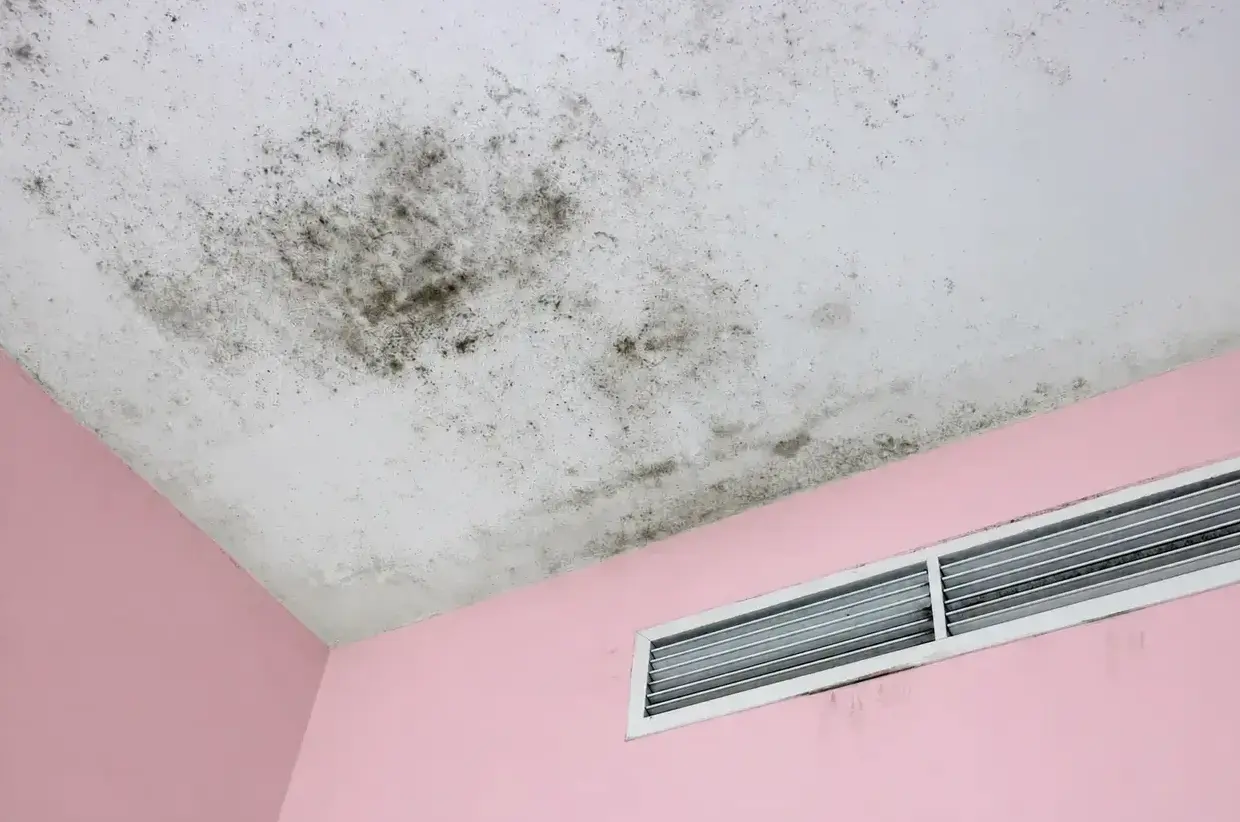
Ceiling Mold Removal Services for Manchester Homes
Manchester's older residential neighborhoods experience the moisture challenges typical of inland New England, where spring and summer dampness can push water vapor into attics, upper walls, and ceiling cavities. The city's historic housing stock—particularly homes built during the mill era—often features construction that allows moisture to accumulate in hard-to-inspect overhead spaces. Without proper ventilation or when roof leaks, plumbing issues, or humidity control falter, ceilings become ideal environments for mold colonies to establish and spread. Property owners in areas like the West Side and East Side frequently discover mold on ceiling surfaces only after visible discoloration or soft spots appear, meaning the problem has often progressed beyond its earliest stages.
Trudy Mold Remediation connects Manchester property owners with independent local providers who specialize in ceiling mold removal, addressing not just the visible growth but the moisture source driving it. The process typically includes thorough inspection to map affected areas, careful containment to prevent spores from spreading during removal, and remediation work focused on eliminating mold and restoring ceiling integrity. The independent providers in the network follow up with moisture assessment and guidance to help prevent recurrence. When you contact Trudy, you're matched with local professionals ready to evaluate your specific situation and develop a removal plan tailored to your home's needs.
Why Manchester Property Owners Choose Trudy Mold Remediation
Fast Ceiling Mold Removal
Trudy connects you with local providers who respond quickly to ceiling mold concerns. Rapid assessment and removal prevent mold from spreading further through your home's structure and air.
Thorough Ceiling Mold Treatment
Independent local providers handle ceiling mold removal with attention to containment and complete remediation. Proper removal protects your indoor air quality and prevents recurrence in treated areas.
Clear Communication Throughout
Trudy's local providers explain what they find and how ceiling mold removal will proceed. You stay informed at every step, from inspection through final treatment and verification.
Moisture Control for Older Homes
Manchester's older residential neighborhoods face persistent moisture from year-round humidity and damp seasons. Local providers connected through Trudy understand how to address ceiling mold in homes where moisture control is essential to long-term protection.
How The Ceiling Mold Removal Process Works
Schedule Your Ceiling Mold Removal Visit
Contact Trudy Mold Remediation to describe ceiling mold concerns in your Manchester home. We connect you with a local independent provider who schedules a ceiling mold inspection at your convenience.
Assess & Diagnose Ceiling Mold Growth
The provider inspects your ceiling for mold extent, moisture sources, and structural damage. Indoor humidity from New England's damp spring and summer conditions often drives ceiling mold in older Manchester homes; the assessment identifies where moisture is entering and how far the growth has spread.
Execute Ceiling Mold Removal & Prevention
The provider removes affected ceiling materials using proper containment, remediates the mold, addresses the moisture source, and restores the ceiling. Follow-up guidance helps you maintain dry conditions and reduce the risk of ceiling mold returning.
Dealing with Ceiling Mold Removal in Manchester? Get fast, professional help.
Call Now — (603) 207-4474Ceiling Mold Removal Across Manchester
Manchester's older residential neighborhoods experience year-round moisture conditions that create favorable environments for mold growth, particularly on ceilings where water intrusion and condensation accumulate. The city's spring and summer seasons bring elevated humidity levels typical of inland New England, and these damp periods compound existing moisture problems in the historic housing stock that characterizes many areas like Amoskeag and the West Side. Attics and upper-floor spaces in aging homes are especially vulnerable to ceiling mold because they sit directly beneath rooflines, where poor ventilation, roof leaks, and thermal cycling trap moisture against interior surfaces.
Basement and crawl-space moisture—common throughout Manchester's mill-era residential districts—also contributes to whole-home humidity that rises and settles on ceilings during cooler months. Effective ceiling mold removal in Manchester requires understanding these local moisture patterns and addressing both the visible growth and the underlying source of water intrusion or condensation. The independent local providers in our network are familiar with how Manchester's climate and older construction methods affect mold development, enabling them to deliver targeted removal and remediation tailored to your home's specific conditions.
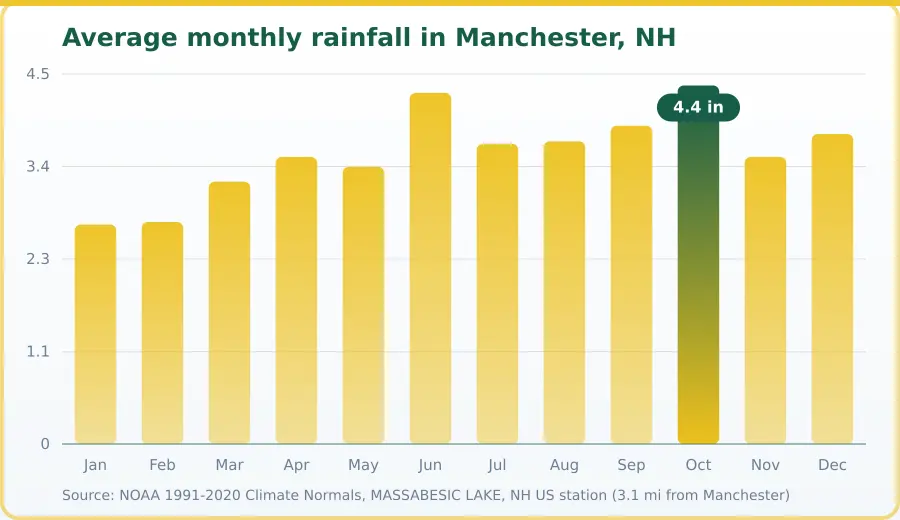
| Period | Monthly rainfall (in) |
|---|---|
| Jan | 2.7 |
| Feb | 2.7 |
| Mar | 3.2 |
| Apr | 3.5 |
| May | 3.4 |
| Jun | 4.3 |
| Jul | 3.7 |
| Aug | 3.7 |
| Sep | 3.9 |
| Oct | 4.4 |
| Nov | 3.5 |
| Dec | 3.8 |
Source: NOAA 1991-2020 Climate Normals, MASSABESIC LAKE, NH US station (3.1 mi from Manchester). Retrieved October 5, 2026.
Seasonal Ceiling Mold Removal Needs in Manchester, NH
Spring: Moisture Awakening
Spring thaw and damp conditions create ideal ceiling mold growth in Manchester homes, especially in older structures where moisture accumulates in upper floors and attics. Trudy Mold Remediation connects property owners with local providers who identify and remove active ceiling mold before it spreads throughout the season.
Summer: Growth Acceleration
Warm, humid summer air accelerates ceiling mold colonization in properties with roof leaks, poor ventilation, or condensation issues. Local providers in the network address visible ceiling mold quickly during peak season, preventing structural damage and protecting indoor air quality before fall arrives.
Fall: Inspection Priority
As temperatures drop and heating systems activate, temperature swings between indoors and outdoors trigger condensation on ceilings—a prime condition for mold onset. Trudy Mold Remediation helps property owners schedule inspections and removal before winter intensifies moisture problems in attics and upper-level spaces.
Winter: Cold-Season Persistence
Manchester's older homes, particularly in neighborhoods like the West Side and North End with historic mill-era construction, retain year-round moisture in their basements and crawl spaces that fuels ceiling mold growth even in winter. Cold indoor–outdoor temperature differences worsen condensation overhead, making winter removal and preventive assessment essential through Trudy's local provider network.
Ceiling Mold Removal FAQs — Manchester, NH
Ceiling mold removal typically begins with inspection to identify affected areas and moisture sources. The independent local provider will contain the work zone, remove contaminated materials safely, and treat surfaces to prevent regrowth. They'll also address the underlying moisture problem—whether it's a roof leak, poor ventilation, or indoor humidity—so the mold doesn't return. The exact scope depends on how extensive the mold growth is.
Trudy Mold Remediation connects you with independent local providers in Manchester who can respond to your needs promptly. Response times vary by provider availability and the urgency of your situation. Contact us with details about your ceiling mold, and we'll help match you with a provider ready to assess and address the problem without unnecessary delay.
Pricing for ceiling mold removal depends on several factors: the area affected, how deep the mold has penetrated into materials, whether structural repairs are needed, and how accessible the ceiling is. Additional costs may apply if moisture sources like roof leaks or ventilation problems require repair. The independent provider you're connected with will assess your specific situation and discuss pricing details directly with you.
Before removal begins, clear the area below the affected ceiling of furniture, personal items, and other valuables. Your provider will set up containment to limit dust and spores, but moving items out helps protect them. They'll explain any temporary measures you may need to take—such as temporarily relocating from the space—and let you know what to expect during the work. Ask your provider for specific preparation steps for your situation.
After removal, maintain good indoor air circulation and monitor humidity levels, especially during damp seasons. Address any roof leaks or plumbing issues promptly, and ensure attic and bathroom vents are functioning properly. Keep gutters clean and check for condensation on ceilings or windows. Your provider may recommend moisture management practices specific to your home's layout and your local moisture patterns.
Manchester's inland climate brings consistent moisture throughout the year, with damp spring and summer conditions that can push humidity levels higher indoors. Older homes common in Manchester neighborhoods may have aging roofs, poor attic ventilation, or other conditions that trap moisture near ceilings. This persistent moisture creates an environment where mold can develop. Prompt removal and moisture control help protect indoor air quality and structural integrity.
Related Services
Homeowner Safety Toolkit
Verify Your Manchester, NH Mold Remediation Company
Before you hire anyone, use these independent national resources to confirm credentials, standards, and track record.
IICRC
Publishes the S520 standard for professional mold remediation. Confirm a company's technicians hold real, current IICRC certification before you hire them.
Verify CertificationCDC
Covers the health effects of mold exposure and safe cleanup practices, separate from the remediation work itself — useful if anyone in the home has respiratory symptoms.
Mold Health GuideBBB
Look up any mold remediation company's complaint history, customer reviews, and accreditation status — a free, independent check before you hire.
Check StandingDealing with Ceiling Mold Removal in Manchester, NH? Call (603) 207-4474 for 24/7 help.
Call Now — (603) 207-4474Areas We Serve in Manchester, New Hampshire
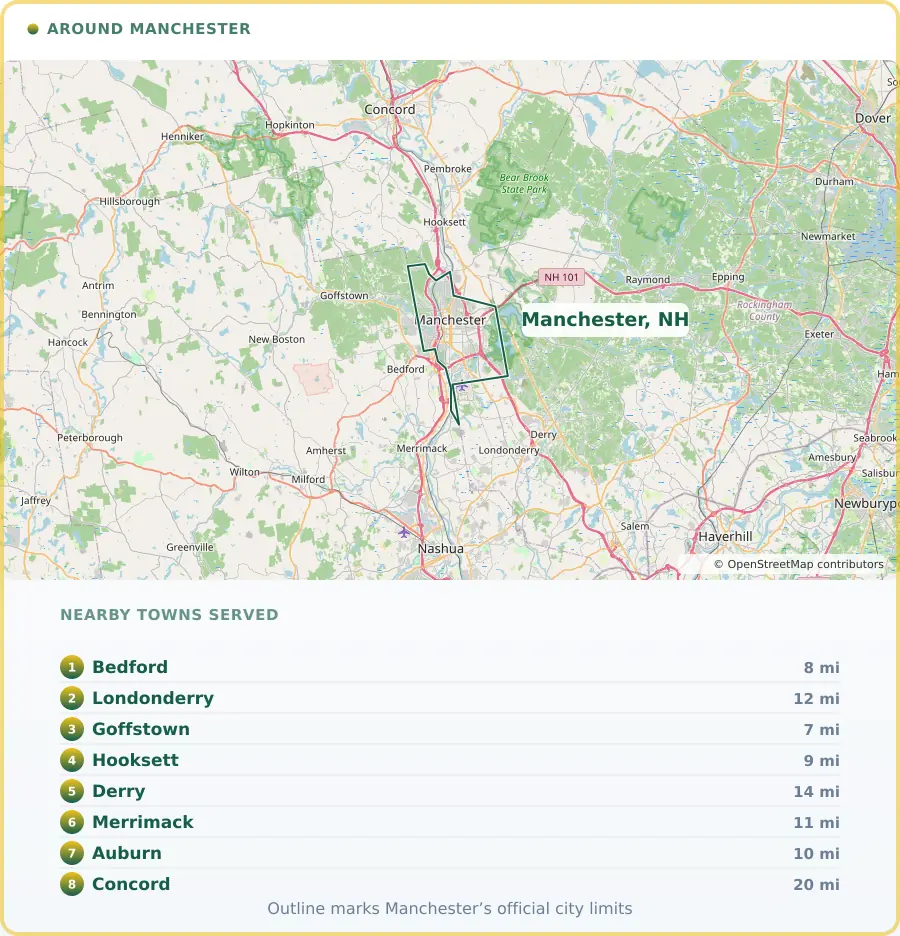
Based in Manchester, NH, with 8 nearby communities inside the service area — near enough to reach quickly, not just listed on a map.
Manchester, NH Information
Manchester is New Hampshire's largest city, a Merrimack River hub where brick mill buildings from its textile-making days now share skylines with modern offices. As the state's economic anchor, it blends healthcare, education, and advanced manufacturing: Elliot Health System and Catholic Medical Center care for the region, Southern New Hampshire University draws students citywide, and BAE Systems and DEKA Research keep engineering and defense work humming alongside finance and retail employers like Fidelity Investments and Citizens Bank.
With roughly 115,000 residents, Manchester still feels like a collection of neighborhoods rather than one sprawling city, from the historic Amoskeag riverside to the tight-knit streets of the West Side. It's a place built on reinvention, where old industry and new ideas keep finding room to coexist.

Photo: Billy Hathorn, CC BY-SA 3.0